

How Modern ENT Clinics Use Technology to Improve Sinus Treatment
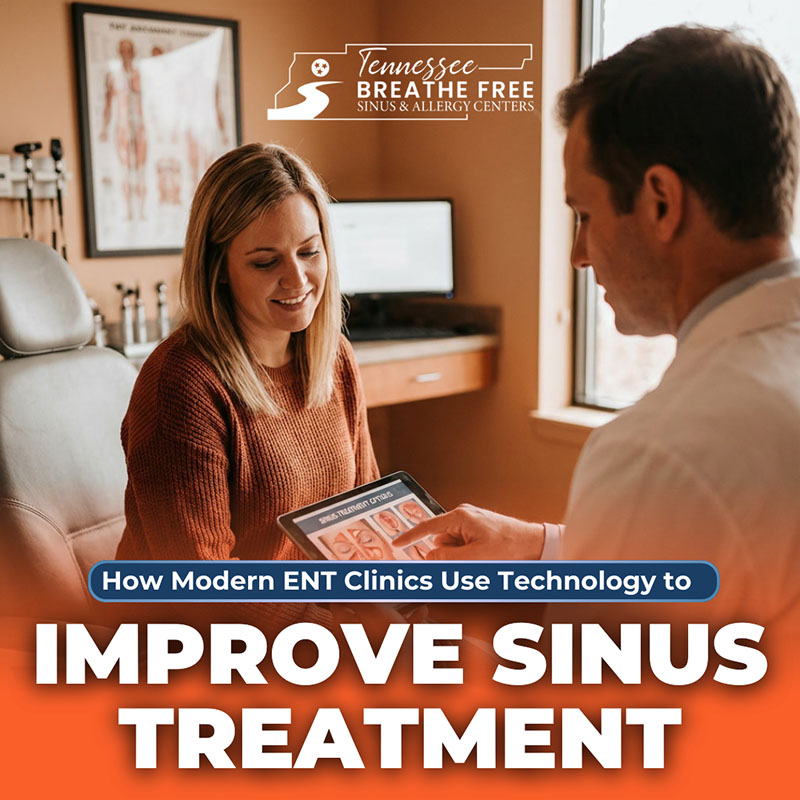
The field of ear, nose, and throat (ENT) care is witnessing transformative developments that could potentially change how healthcare professionals and practices in the field operate in diagnosing, treating, and managing several ENT issues, including those that affect the nose and sinuses.
Technological advancements may help ENT care professionals develop tailored diagnosis and treatment plans based on the patient’s clinical findings, medical history, and personal health goals.
This guide–developed by Tennessee Breathe Free–is intended to provide information on how modern ENT clinics in Tennessee utilize technologies to improve sinus care and treatment.
How ENT Technologies Impact Sinus Care and Treatment
The development of new ENT technologies offers several benefits for patients and healthcare providers alike, such as:
- Precise and accurate diagnosis
Recent technological developments in the medical field of ENT have allowed for more accurate and precise testing and diagnosis. New technologies have allowed ENT care providers to accurately determine potential contributing factors that may worsen ENT symptoms and conditions.
- Development of individualized treatment care plans
A precise and accurate diagnostic approach allows clearer insights into the patient’s condition, including personal health factors such as clinical findings, medical history, lifestyle, and health goals. This allows ENT physicians to create and develop individualized care plans that are more tailored to each patient’s specific condition and needs.
- The increasing development and use of minimally invasive procedures
Modern and newly developed ENT technologies have allowed for the development and increasing usage of more minimally invasive procedures. In certain cases, patients may experience benefits such as improved comfort and shorter recovery times. However, individual outcomes vary significantly depending on personal health factors and the complexity of the procedure.
ENT Technologies Tennessee Clinics Use to Improve Sinus Care and Treatment
-
High-resolution 3D imaging
The continuous development of high-resolution 3D imaging has enhanced imaging, planning, and surgery execution, as it gives ENT doctors a clear and detailed image of the complex sinus structures. However, it is not a standalone diagnostic tool and must be interpreted alongside clinical findings. -
Minimally invasive treatments
New ENT technologies have allowed for the increasing development and use of minimally invasive treatments in the ENT setting. Such minimally invasive treatment options include:Balloon sinuplasty
Balloon sinuplasty is a minimally invasive procedure that uses a small balloon catheter inserted into the affected sinus cavity. Once in place, the balloon is gently inflated, widening the sinus opening and supporting proper mucus flow and drainage. In some cases, balloon sinuplasty may help relieve persistent nasal congestion.While balloon sinuplasty may offer several benefits, like a shorter recovery time, there are potential side effects such as infection, bleeding, or recurrence of symptoms.
This outpatient procedure is less invasive than traditional sinus surgery and may be appropriate for certain patients. However, it may not be suitable for all patients. A consultation with your care provider can help determine if this is right for you.
Endoscopic sinus surgery (ESS)
Endoscopic sinus surgery (ESS) is a minimally invasive procedure that uses a small instrument called an endoscope. An endoscope has a light and a camera on one end and is inserted into the sinuses to obtain a clear and precise visual of the sinus structure.ESS may help address persistent nasal obstruction in select patients with anatomical issues like nasal polyps or a deviated septum. However, outcomes vary, and potential risks should be discussed with your ENT care provider.
Though considered minimally invasive, ESS requires a skilled ENT surgeon to minimize potential surgical risks and complications. Your ENT doctor can help determine whether this option aligns with your medical needs.
Laser therapies
Laser therapies may be considered to remove nasal polyps–excess nasal tissues that may block the sinuses and cause persistent breathing difficulties. Potential side effects may include swelling or bleeding in the treatment area.However, laser therapies are not yet universally adopted and may not be suitable for all sinus and ENT patients. While often well-tolerated, laser therapy is not suitable for all patients and should be thoroughly discussed with your ENT care provider.
Radiofrequency
Radiofrequency may sometimes be used to shrink swollen nasal passages, which, for some patients, may be the culprit for chronic sinus issues. This is well-tolerated by many patients; however, as with any procedure, there are potential side effects, such as temporary nasal discomfort, bleeding, or dryness. Individual results vary, and outcomes are not guaranteed. -
Image-guided sinus surgery
Image-guided surgery guides ENT surgeons with real-time surgical navigation and highly detailed images of the patient’s sinus structure. Availability of the technology may vary by clinic and case complexity. When available, this technology may assist the surgeon in navigating the complex sinus anatomy during procedures. -
Telemedicine
Telemedicine has allowed patient-provider consultations and communications to be conducted remotely, often via video calls. This allows healthcare providers to remotely monitor symptoms, track the patient’s response to treatment, and make necessary adjustments even without having face-to-face consultations. -
Targeted drug delivery
Targeted drug delivery systems allow for a convenient and efficient use of traditional medications by releasing them directly into the affected sinus cavity.In select post-operative cases, ENT specialists may use FDA-cleared biodegradable stents designed to help maintain sinus patency. While some providers may also use these devices to deliver medication directly into the sinus cavity, this is considered off-label and is not FDA-approved for that purpose. Always discuss the risks, benefits, and alternatives of off-label use with your ENT provider.
Sinusitis FAQs in Tennessee
What is sinusitis?
Sinusitis is characterized by the irritation and inflammation of the sinuses, which are hollow, air-filled spaces located behind the nose, cheeks, and forehead. The sinuses naturally produce mucus, which humidifies and filters the air we breathe. Sometimes, the sinuses can become irritated, leading to swelling and inflammation. This is due to a variety of factors, including but not limited to allergies, bacterial infections, and viral infections.
What are the common symptoms of sinusitis?
Sinusitis symptoms vary from patient to patient, but common signs include:
- Nasal congestion
- Runny nose with thick yellow or green discharge
- Facial pain and pressure, which can get worse with sudden head movements
- Postnasal drip, or mucus dripping down the back of the throat
- Ear pain or pressure
- Tooth pain
- Coughing
- Headache
- Fever
- Fatigue
- Bad breath or a bad taste in the mouth
Choosing a Sinus Specialist ENT in Tennessee
If you’re comparing sinus care options, Tennessee Breathe Free is happy to answer any questions you may have. Explore our ENT services in Tennessee or contact our team directly.